If your team is still chasing spreadsheets and grainy photos at week's end, you're losing the shelf. Five diagnostic signals — and the fix for each.
Most field programs were designed for a world where weekly reporting was good enough and a photo dump into email counted as data. That world is gone. Today's category leaders make decisions in days, sometimes hours — and the field program you built five years ago is quietly capping your growth.
Here are the five clearest signs it's time to modernize, plus what to put in place instead.
1. You can't tell — on a Tuesday — what your displays looked like on Monday
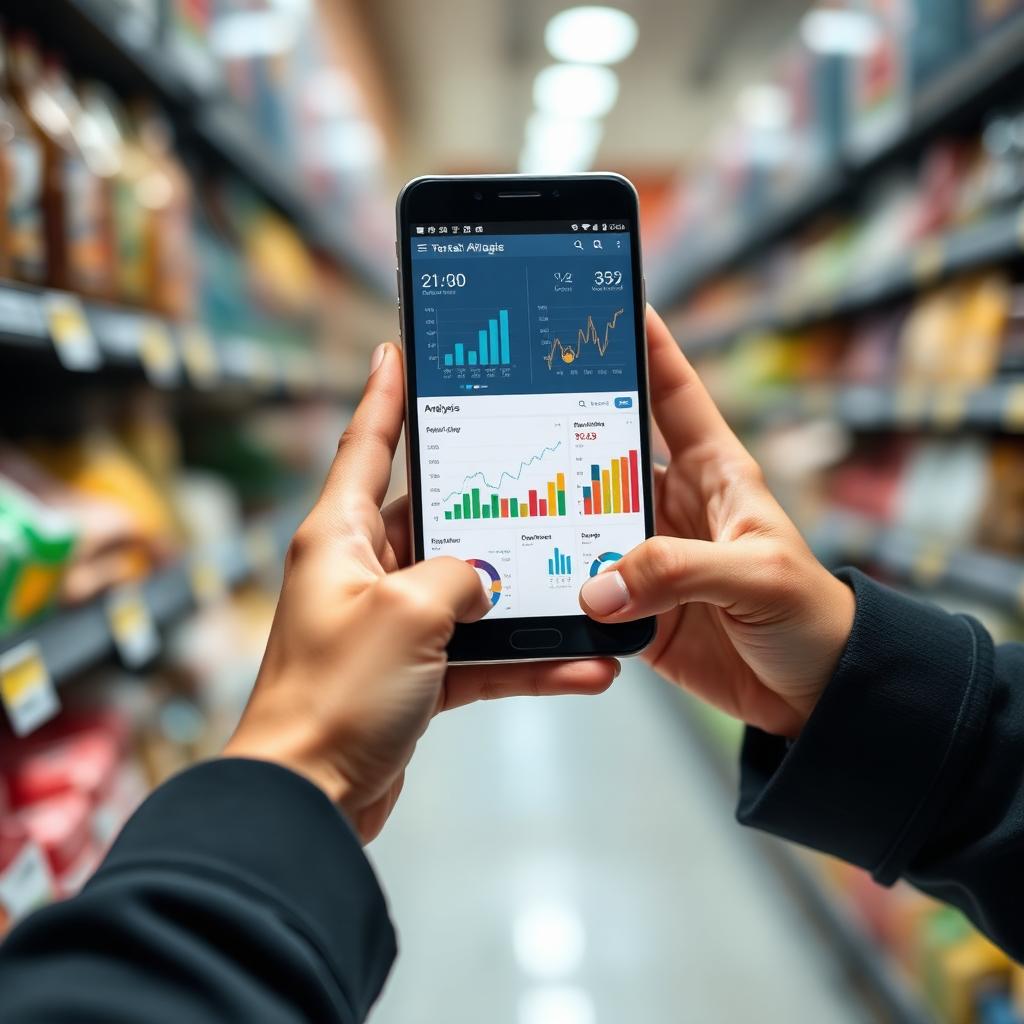
If leadership has to wait until Friday's recap to see how the week is going, you've already lost 60% of the reaction window. Real-time dashboards fed by structured mobile capture close that gap.
Fix: Adopt a capture flow that lands in a live dashboard within minutes. Photos or short videos, geotagged, tied to store and SKU.
2. Two reps in the same chain report the same store differently
Inconsistent data is worse than no data. When two reps capture "the same" display with different tags, categories, or interpretations, HQ ends up debating definitions instead of executing.
Fix: Move to a structured, AI-assisted capture flow. Reps confirm — they don't classify. Consistency comes from the tool, not from training slides.
3. Photos live in someone's camera roll
If asked "show me the last three visits to Store #4212," can you produce them in under 60 seconds? Camera-roll workflows fail this test every time and expose the brand to compliance and audit risk with retailers.
Fix: Centralize all field media in a searchable library, indexed by store, date, chain, and category.
4. You learn about competitive activity from a buyer, not your team
Nothing kills a JBP faster than a buyer pointing out something your rep saw two weeks ago but didn't escalate. Competitive intel is a first-mover game.
Fix: Give reps a fast, low-friction way to flag competitive moves — new products, price changes, endcaps — and route those signals to category managers automatically.
5. Best practices stay trapped in your top performers' heads
Every field org has a handful of reps who consistently outperform. If their tactics aren't captured, taught, and repeated, you're paying for insight you can't scale.
Fix: Use compliance data to identify what top performers do differently — visit cadence, capture depth, follow-up speed — then bake those behaviors into shared playbooks.
What "modern" actually looks like
- Capture: video-first, AI-assisted, under 90 seconds per fixture
- Data: structured, comparable across reps and chains
- Dashboards: live, filterable by chain, region, SKU
- Action: every gap routed to a specific owner with an SLA
- Coaching: trend lines shared transparently with reps
Sound familiar? These are exactly the workflows Shelfies.ai was built to power.
Key takeaways
- Weekly reporting is too slow for today's retail cadence.
- Data consistency comes from the tool, not from training.
- Every insight needs a named owner and an SLA to become action.
- Coach with data — don't police with it.
FAQ
How long does it take to modernize a field program? Most CPG teams see meaningful gains inside 60 days: capture standardized, dashboards live, first coaching cycle complete.
Do reps push back on structured capture? Not when it saves them time. AI tagging removes the most-hated part of the job — manual classification — so reps actively adopt it.
Should I replace my current field-force tool? Only if it can't produce comparable, real-time data. Many teams layer Shelfies.ai on top of existing CRMs for the capture and insights layer. Talk to us.